Fraud by the numbers.
As fraudsters evolve their tactics and use AI more effectively, businesses are paying the price.
Swipe to view all statistics →
79%
Organizations reported experiencing fraud attacks or attempts.
7.7%
Average revenue lost by businesses affected by fraud.
$3B
Total losses due to Business Email Compromise in 2025.
Hear from our experts.
Take it from us: we know what it takes to go up against the bad guys. Hear from some of our expert bankers how Washington Trust prepares you to face fraud risks of all shapes and sizes.
Let’s get a scouting report on your opponent.
Vice President and Relationship Manager III Seth Kinsey walks us through how fraud happens along with three core categories of fraud: human-driven deception, financial and payment fraud, and technical system compromise.
It’s now time to go on offense.
As Senior Vice President and Relationship Manager IV Greg Hansch explains, the most effective way to fight fraud is to disrupt attacks before they happen. Greg shows us how tactics like regular training, strong internal controls, and more go a long way in forcing fraudsters to move on.
Sometimes, even the strongest prevention efforts won’t stop a fraud attempt.
That’s why defense matters. Senior Vice President and Commercial Banking Team Leader Kevin Bedlington details strategies that are designed to slow attackers down and catch fraud as early as possible.
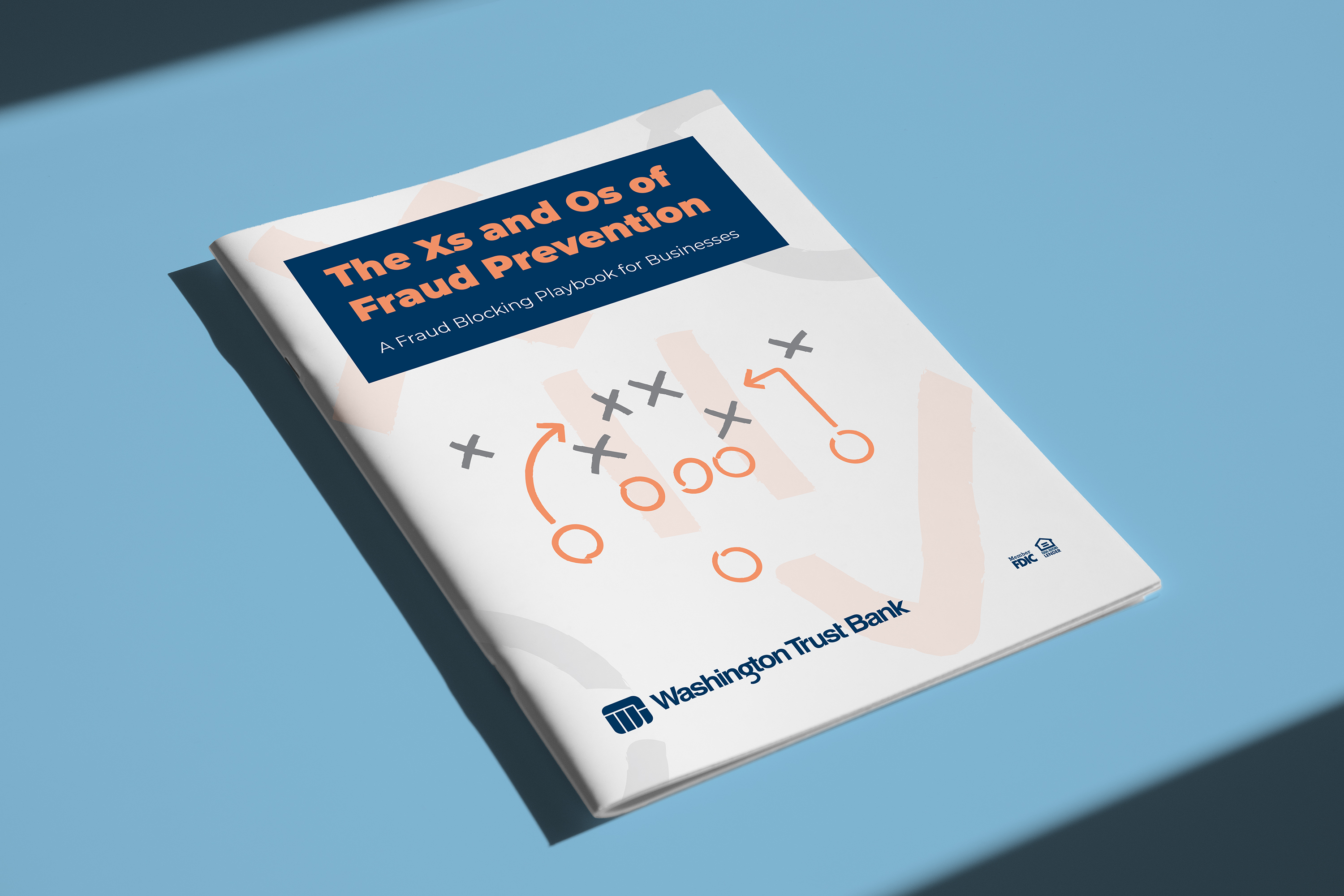
What's inside the fraud prevention playbook?
Our experts have developed a strategy to understand your opponent, and how to play both offense and defense. We’ll go over how fraud looks and feels, including scouting reports on some of the most common scams. Finally, we’ll arm you with the skills, know-how, and internal controls on what to do when fraudsters come knocking on your virtual door for sensitive information.
Email compromise and phishing.
Business email compromise and phishing are common fraud tactics in which scammers impersonate or spoof trusted individuals, organizations, or email accounts to steal sensitive information or redirect payments.
ACH, wire fraud, and payment fraud.
Fraudsters frequently target payment rails, including ACH and wire transfers, using compromised accounts or payment processes to execute unauthorized or manipulated electronic payments.
AI, deepfakes, and emerging threats.
Also known as synthetic identity fraud, scammers create identities using real, false, and stolen data fragments through deepfakes, including fabricated audio and images that appear real.
Social engineering and human deception.
In a social engineering attack, fraudsters use phone calls, texts, or in-person manipulation combined with psychological control to gain access to systems or payments.
Fraud prevention strategies.
Businesses are best protected by taking a proactive, offensive approach that disrupts suspicious activity rather than relying solely on defensive measures after an attack.
Incident response and recovery planning.
When proactive measures aren't enough, defensive fraud prevention tactics can help limit damage, enable rapid detection and response, and strengthen organizational resilience.